Why Northern Europe Leads in Complex Superyacht Refits
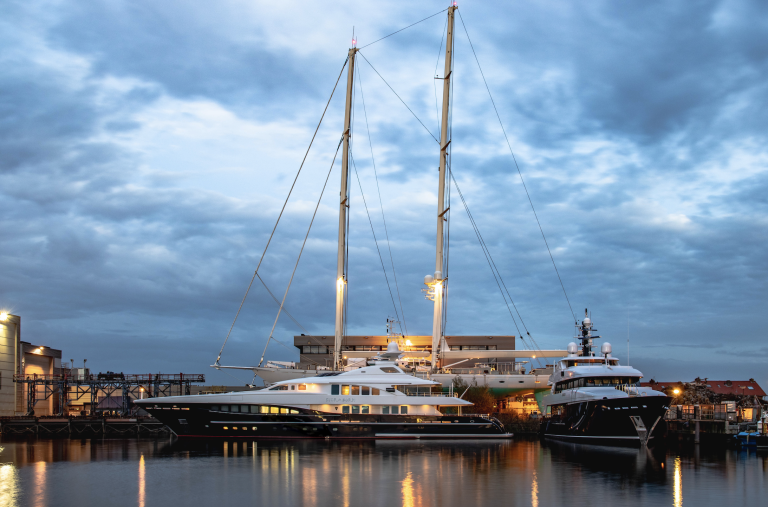
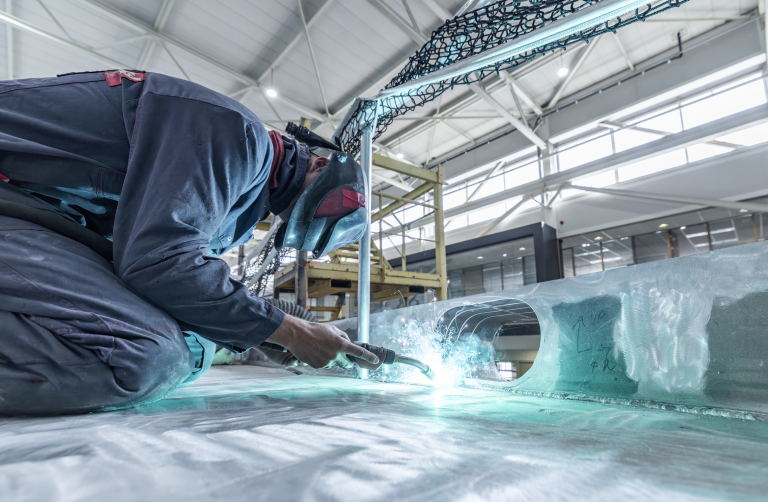
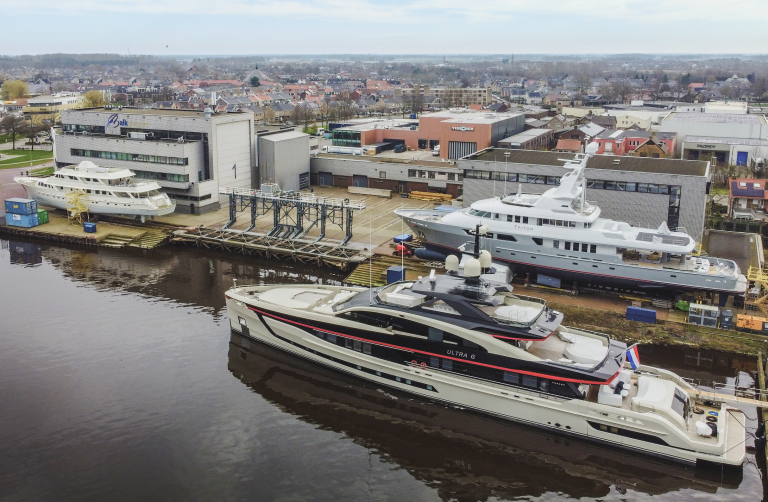
When a superyacht requires a complex refit, owners and management companies consistently look north. Northern Europe, and the Netherlands in particular, attracts the most technically demanding superyacht refit projects in the world. The reason is not infrastructure alone. It is the ability to manage risk, absorb complexity, and protect the crew from the operational disruption that a poorly planned refit inevitably creates.
Not Just a Refit. A Risk Management Operation
A Dutch refit shipyard does not simply execute a work list. It organises the entire refit project, anticipates problems before they surface, and holds the plan together when conditions change. In yards where refit project management is weak, unexpected findings become crew problems. The captain gets called for every decision. The engineer is pulled into discussions that should have been resolved at the planning stage. A yard that manages risk independently protects the crew from that burden.
Designed for Captains
A captain managing a superyacht refit is simultaneously accountable to the owner and coordinating with a technical team across multiple disciplines. Fatigue builds, the season approaches, and unresolved items carry forward. Dutch yards operating from a structured workflow and a clearly communicated timeline reduce that pressure at its source. Predictable schedule. Minimal crew disruption. A yard that has already anticipated the problems the captain has not yet encountered.
A Maritime Ecosystem Built for Complexity
Dutch shipbuilding has centuries of continuity, and those centuries carry practical consequences for every superyacht refit project managed in the region. Naval architects, structural engineers, classification surveyors and systems integrators operate within a well-established regional network. Coordination between the class society, engineering firm and subcontractors happens faster when all parties have worked within the same ecosystem for years. In regions where subcontractor chains are longer and workflows less integrated, change orders tend to increase and delivery outcomes become harder to predict. The Dutch ecosystem is structured to minimise both.
Why Dutch Yards Deliver a Technical Edge
The technical case for the Netherlands is not built on reputation alone. In 2024, the Netherlands was the world’s largest builder of superyachts over 80 metres, with nearly 70 percent of all Dutch output fully bespoke, according to ABN AMRO’s 2025 sector analysis.
This level of customisation demands engineering depth that series-production yards simply do not develop. Naval architects, propulsion engineers, and systems integrators working within the Dutch cluster build that depth over decades, project by project. For a vessel undergoing structural modification, class renewal, or full system integration, that accumulated expertise is not a background detail. It is the difference between a refit that performs under real operating conditions and one that falls short of expectations at delivery.
References
ABN AMRO / HISWA-RECRON Sector Report, summarised by SWZ Maritime, August 2025. https://swzmaritime.nl/news/2025/08/18/superyacht-market-cools-but-dutch-yachts remain-in-demand/
METSTRADE, “Navigate your refit: 10 things to look for in a superyacht yard” April 2025. https://www.metstrade.com/news/sustainability/choosing-a-superyacht-refit-yard